
Home/Invasive Plants
Field guide
The plants we're usually called about.
What grazing realistically does to each one, and how many seasons it tends to take. No plant on this page is a one-visit fix, and we won't pretend otherwise.
In-depth guides
Full field guides.
Longer, honest write-ups on the three we get called about most — including what works besides goats, and how long control really takes.
How control actually works
Every plant here stores energy in its roots. Cut the top off once and it spends some of that reserve rebuilding leaves. Cut it off again before it has restocked, and again after that, and the reserve runs down. Growth comes back thinner, later and weaker each cycle.
That's the whole mechanism, and it's why timing and repetition matter more than intensity. A single hard grazing looks dramatic and accomplishes less than three well-timed ones. When someone tells you goats will kill kudzu in one summer, they're selling.
Plant by plant
What to expect from each.
Kudzu
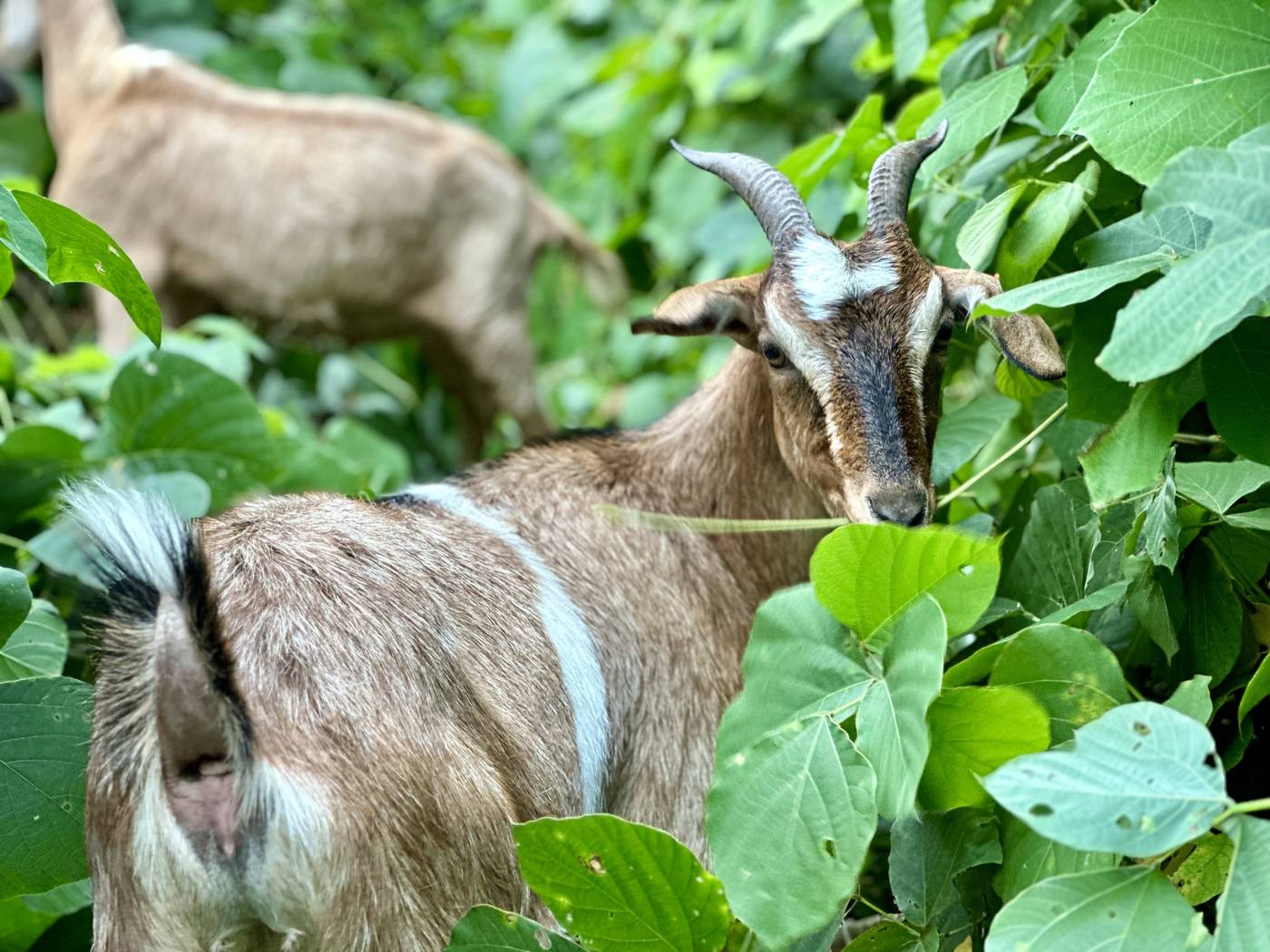
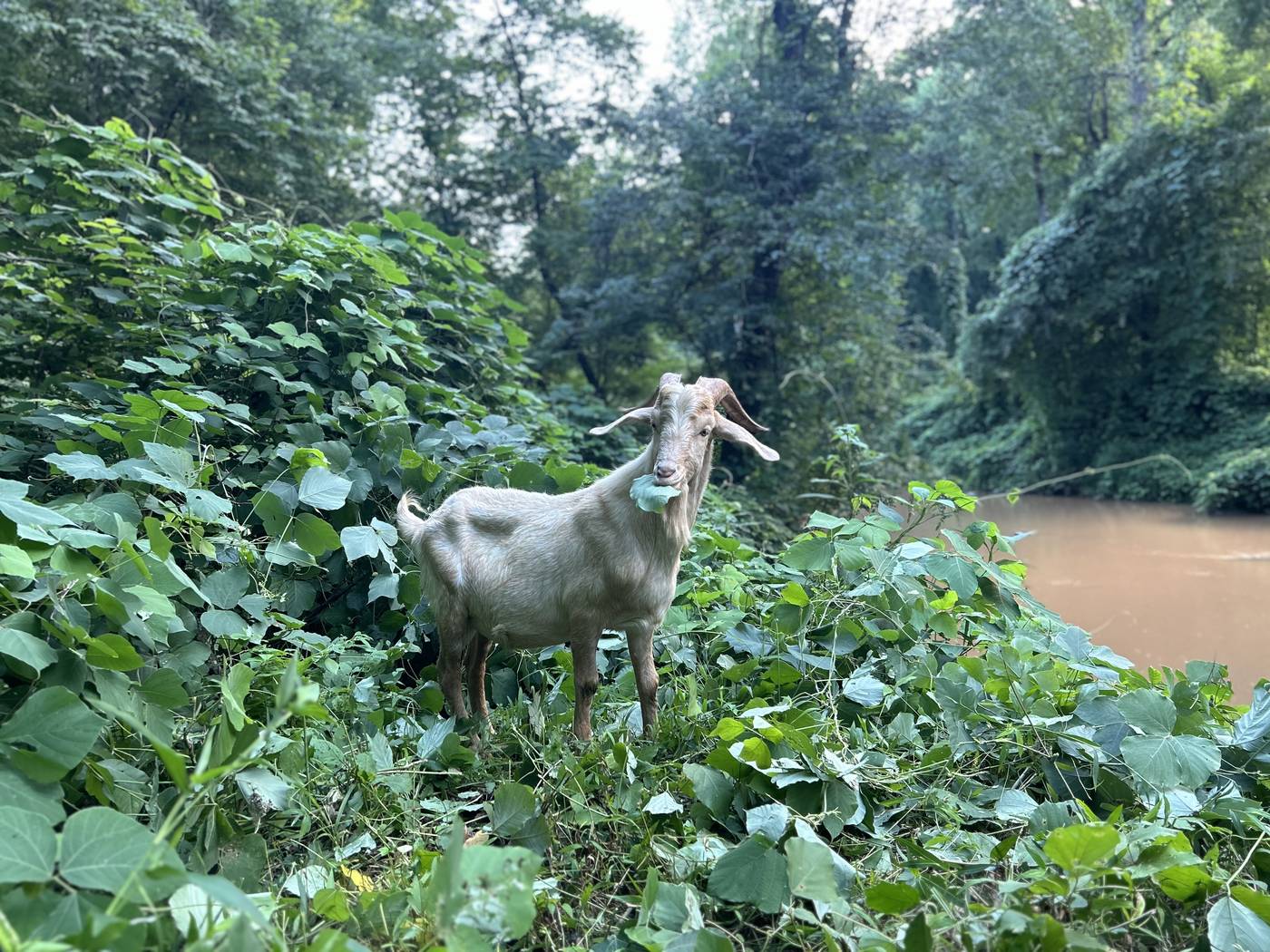
Goats take it readily and it's one of the most satisfying to watch come down. Expect strong first-season knockback and regrowth from the crown; plan on repeat grazings across two to three seasons for real suppression. Read the full kudzu guide →
English ivy
Browsed well at ground level and off tree trunks within reach. Ivy is stubborn and mat-forming — it needs repeat cycles, and heavy ground mats may need mechanical help.
Read the full English ivy guide →Japanese honeysuckle
A favorite. Comes down fast and responds well to repeat grazing, especially when hit before it sets seed.
Chinese privet
Goats strip leaves and bark; bark damage on smaller stems is what does the real work. Larger stems survive and may need cutting, with grazing keeping the resprouts down.
Multiflora rose
Thorns don't slow them down. Good knockback, and repeat grazing on the resprouts is what keeps a thicket from re-forming.
Autumn olive
Browsed well at reachable height. Established shrubs resprout hard, so this is a multi-cycle plant.
Wisteria Assessed case by case
Goats do browse wisteria, and on a property where it's one plant among many it's simply part of the job. Heavy, established stands are a different question — we won't take one on sight-unseen, and we'll tell you at the assessment whether grazing is the right approach or whether the stand needs another method. The root system is durable either way, so first-season results are knockback, not removal.
Oriental bittersweet
Grazed well where reachable. Best results come from grazing before fruiting to cut down on bird-spread seed.
Poison ivy & poison oak
Goats are unaffected by urushiol and eat both. Note that the oil can transfer from coats, so we handle the animals accordingly during and after a job.
Read the full poison ivy guide →Blackberry, briars & greenbrier
Native but aggressive. Grazing opens these up quickly; repeat visits keep them from closing back in.
Sericea lespedeza
Goats will take it, and grazing before seed set is the important part of any control plan.
Thistle, ragweed & broadleaf weeds
Readily eaten. These respond faster than the woody invasives and often clear within a single well-timed grazing.
Something not listed, or plants you specifically want protected? We identify both during the site assessment, and we fence or cover anything worth keeping before the herd goes in.
Ready when you are
Have an invasive problem?
We'll identify what you're dealing with on site and give you a realistic multi-season plan.